Exhibition | Selected Exhibitions
Policy, Memory, and Material Experience: Labay Eyong and the Era of American Aid
Nov. 23-Dec. 23, 2022, Archives, Institute of Modern History, Academia Sinica
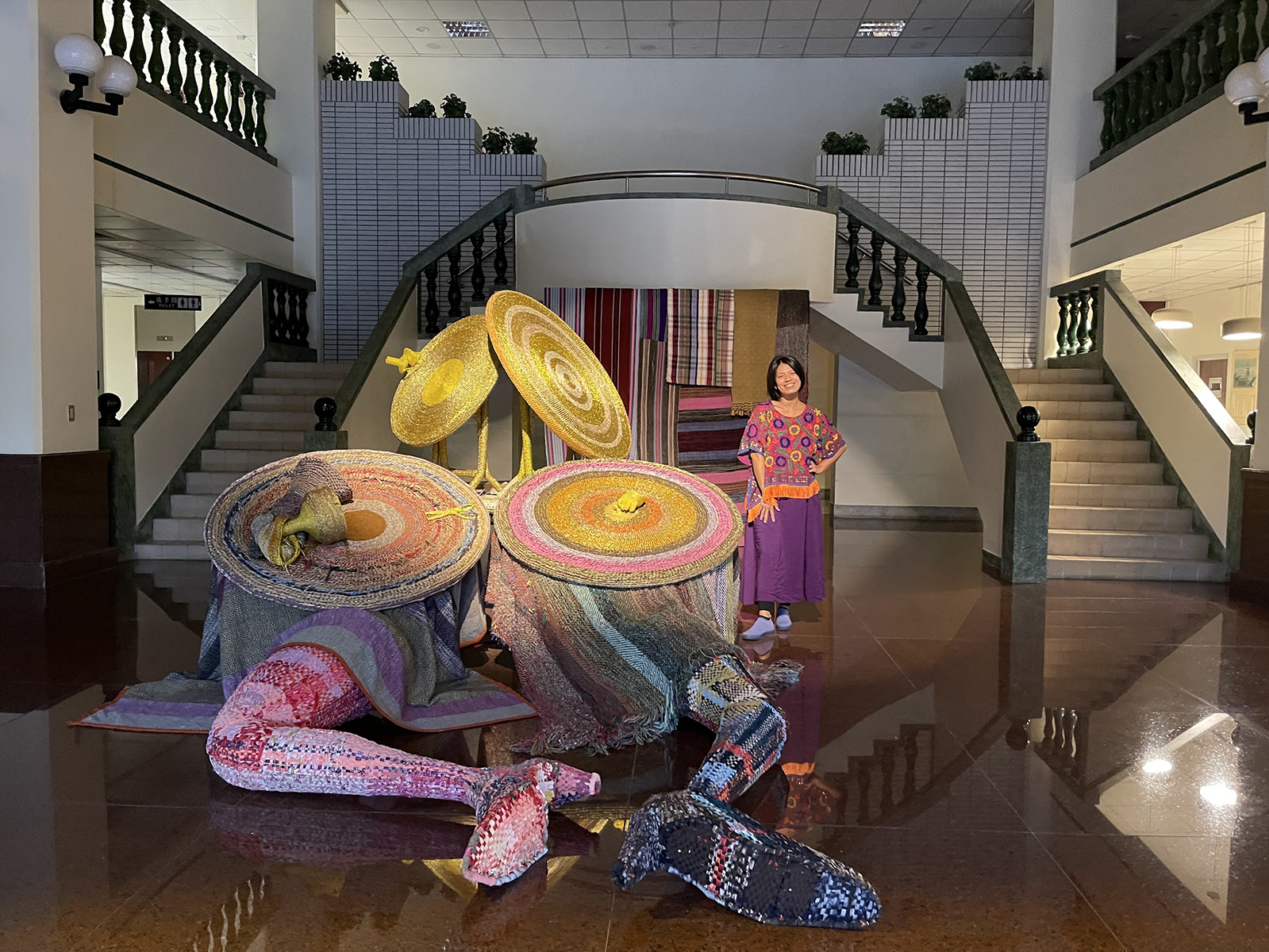
This exhibition examined the intersections of Cold War politics, indigenous memory, and material culture. Featuring Truku artist Labay Eyong, it highlighted the creative practice of unraveling U.S. aid sweaters in 1970s indigenous villages and reweaving them into blankets, transforming scarcity into resilience. Labay’s textile sculptures, such as Red Dinosaur and Mountain Mother, were shown alongside archival documents from U.S. aid agencies, creating a dialogue between personal memory and state policy, and revealing how global politics shaped everyday indigenous life.



EXHIBITION PAMPHLET
Exhibition Statement (English version, translated by google translate)
Born in the 1980s in the Red Leaf Tribe of Hualien, contemporary artist Lin Jiewen (Labay Eyong) explores issues related to women, ethnicity, the environment, and society through her work, encompassing a diverse range of media, including soft sculpture, video, metalwork, and landforms. In 2020, she was shortlisted for the Taishin Art Award for her exhibition, “Wrapped Mountain,” curated at the Ruixin Mining District on Red Leaf Mountain in her hometown. Lin Jiewen’s art is vibrant and bold, her grasp of subject matter is precise and fluent, and she excels at weaving female bodily experiences into larger political, social, and ethnic issues. She is not simply a “female” or “indigenous” artist, but a contemporary artist capable of communicating within the vocabulary of contemporary art.
Part of Lin Jiewen’s artistic journey can be seen as a microcosm of the recent development, displacement, and evolution of Taiwanese subjectivity and ethnic politics. From “Lin Jiewen” during her student days to “Lin Jiewen / Labay Eyong” today, like many of her Han Chinese peers, she has traveled north to study, studied abroad, and transitioned from Atayal to Seediq, and finally to Taroko. The experience and exploration of “Indigenous women” and their identity have indeed provided rich nourishment and layers to her work. In 2008, after receiving a Master’s degree in Spatial Design from the University of Barcelona, Spain, she returned to Taiwan. Initially, she used metalwork as a medium and developed Indigenous-style metalwork accessories under the title “BUBU’s Wardrobe.” “BUBU” here means “mother” in her native language, referring to Lin Jiewen’s grandmother. This grandmother’s wardrobe serves as a treasure chest and womb for Lin Jiewen’s creations, providing her with a constant source of material for reflection on her own art and identity.
In 2014, after inheriting 200 pieces of woven fabric from her grandmother’s wardrobe, Lin Jiewen began learning to weave, learning to become a Taroko woman. She has developed a series of large-scale soft sculptures based on weaving, including the three works on display. These vibrantly colored weavings are inspired by the tribal experience of the American-aid era, when her grandmother and the other women in the village received American-aid sweaters, not to wear them but to dismantle and weave them for reuse. These quilts, made from recycled sweaters known as “Tambrigen” (exchange), transformed the material constraints and color palettes of traditional tribal weaving. They not only reconstructed the one-way, passive relationship of giver and receiver within the complexities of international politics, but also ushered in a creative revolution within the tribe. Lin Jiewen’s works on display are grounded in the transformation of material experience during this era of American aid, and the tribal experiences and family memories that emerged from these transformations. Through the physical labor of weaving, Lin not only reconstructs past family histories but also makes them the thread that shapes her own life experiences as a woman.
Lin Jiewen’s work demonstrates how American aid transformed the daily material experiences of ordinary people and how these memories informed contemporary art. Throughout this process, weaving became seen as a crucial material expression of Indigenous identity. This narrative is not unique to Lin Jiewen; it is shared by many contemporary Indigenous female artists in Taiwan. Our museum houses a rich collection of American aid archives, many of which relate to the establishment of weaving training centers within the tribe. Within the framework of American aid policies, Indigenous weaving was considered something in need of rescue and transformation. This exhibition juxtaposes these official archives with contemporary Indigenous art woven together, hoping to reveal the complex relationship between identity politics and material culture through the gaps and diverging narratives between them, thereby opening up richer research possibilities in the future.

(Screenshot of the Google-translated website. Since it is machine-translated, the English may differ slightly from my official version)


The photo of the designer, the artist, and me (the curator) (from left to right)

The poster

The snap shot of the opening of the exhibition
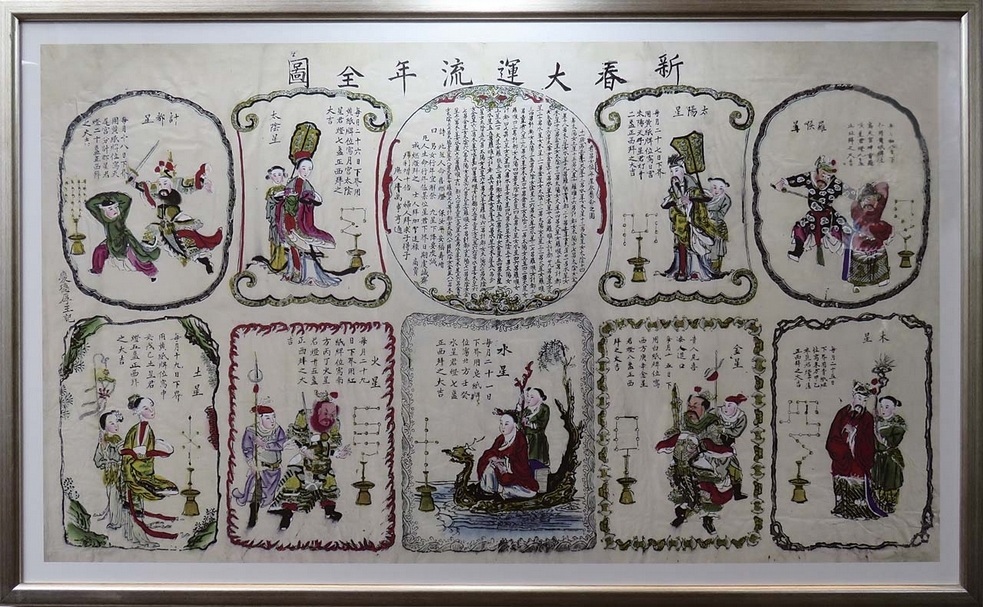
LATE QING PRINTS FROM THE KUNSTKAMERA COLLECTION IN ST. PETERSBURG
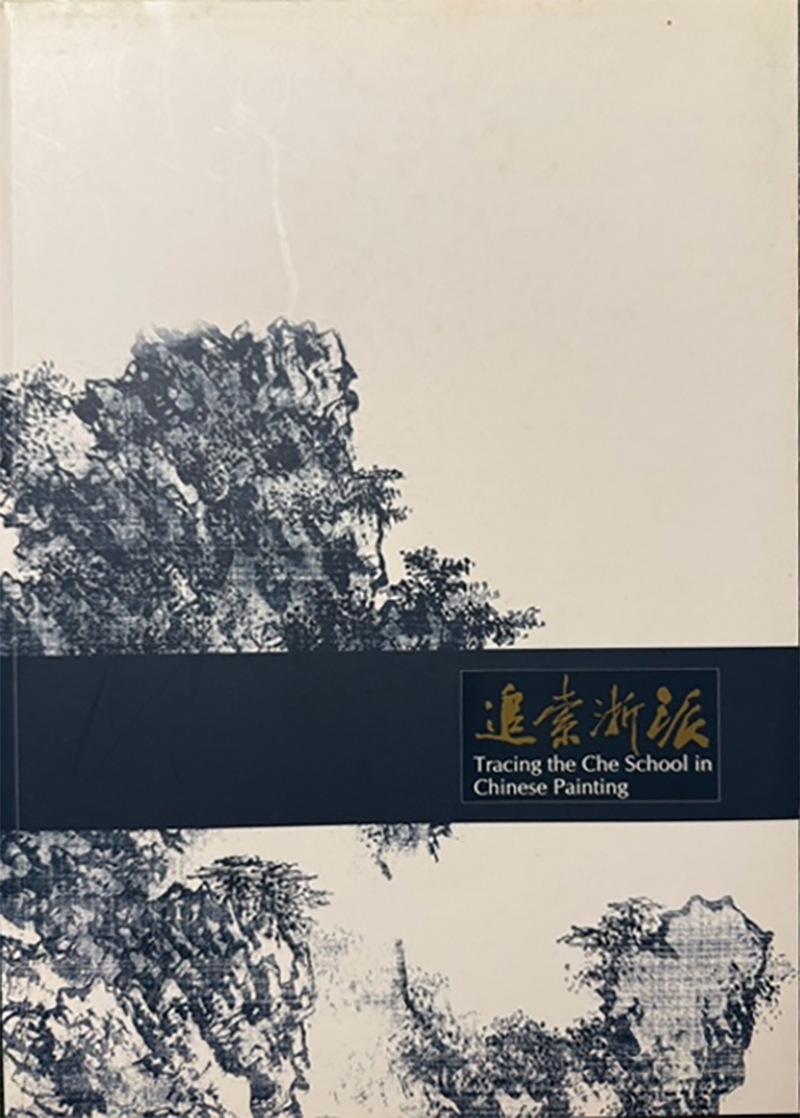
TRACING THE CHE SCHOOL IN CHINESE PAINTING